The Agentic AI Trend in 2026: What It Means for How Teams Work
2026 is the year AI stopped answering and started doing. Here's what the agentic shift actually changes for how teams plan, coordinate, and ship — minus the hype.
on this page4 sections
For two years, AI at work meant a text box. You asked, it answered. Summaries, drafts, explanations — fast, but you stayed the engine. Every output needed you to read it, decide, and act.
The agentic turn moves the AI from the text box into the workflow. Instead of answering "what's blocked," it finds the blocker and pings the owner. Instead of drafting a status report on request, it has one ready when you log in. The unit of value shifts from a better answer to work that already happened.
note:
The trend in one line: 2025 was AI that responds. 2026 is AI that acts — pursuing goals across multiple steps, with the human reviewing instead of operating.
Why 2026 and not 2024
Three things had to land at once. Models got reliable enough to plan multi-step work without losing the thread. They learned to stay constrained to a structured schema, so output is a usable object — a task, a date, a plan — not a paragraph you have to parse. And software started exposing real actions for an agent to take instead of just text to generate. Plan, schema, actions: once all three exist, the AI can close the loop on its own.
For teams, the change shows up as fewer coordination chores. The work that used to eat a project manager's day — chasing updates, breaking goals into tasks, writing the same status note every Friday, noticing the thing that quietly stalled — is exactly the work agents are good at. It's repetitive, state-driven, and bounded. That's the sweet spot.
What doesn't change: judgment. Priorities, trade-offs, the call on what matters this week, unblocking a stuck person. Agents clear the busywork; they don't make the decisions.
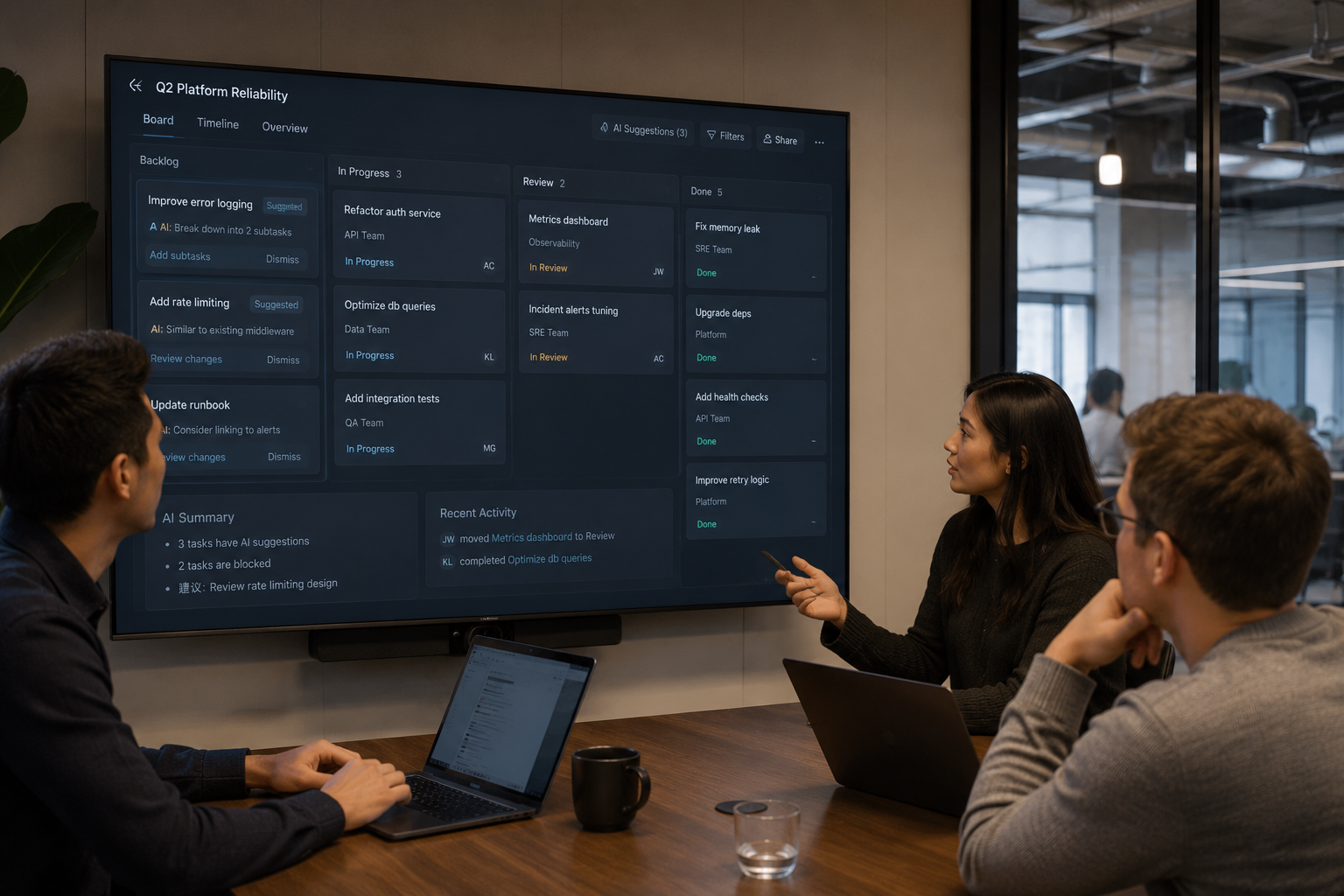
What actually changes, task by task
| The chore | Before (you) | Agentic (AI proposes, you approve) |
|---|---|---|
| Planning a project | Build the milestone/task list by hand | Generate a full plan from one brief, then edit |
| Capturing decisions | Re-type action items after the meeting | Paste the transcript, get proposed task changes |
| Status reporting | Write the same update every week | A draft from real activity, ready to send |
| Catching slippage | Hope you notice the stalled task | The agent flags it and pings the owner |
| Answering "where are we" | Dig through the board | Ask, get a cited answer from your own data |
How to ride the trend without the hype
Every tool will say "agentic" this year. Most mean "we added a chat box." Three filters keep you honest:
- Does work happen between your sessions? If nothing moves unless you're typing, it's a copilot wearing the word.
- Is the output structured and grounded? Real agents act on your actual data — tasks, dates, owners — not free text about it. (This is also why closing the loop matters more than answer quality.)
- Can you review before it lands? The trustworthy pattern is propose-then-approve. Destructive actions stay opt-in; you keep an audit trail.
aside:
One practical note: agents run more model calls than copilots, so cost scales with autonomy. Tools that meter every action get expensive fast — which is why bring-your-own-key pricing pairs naturally with the agentic trend.
Where sprintrr fits
sprintrr is built around this loop. It generates a full project plan from an idea, turns meeting transcripts into proposed task changes, nudges tasks that stall, drafts stakeholder status updates from real activity, and answers questions grounded in your own project — all reviewable before anything lands, and runnable on your own key. The point isn't novelty for its own sake. It's getting the coordination tax off your plate so the team spends its hours on the work only people can do.
What is agentic AI?
Agentic AI describes systems that pursue a goal across multiple steps — planning, taking actions, checking results, and adjusting — rather than only responding to a single prompt. The AI owns part of the work loop, with a human reviewing the output.
Why is agentic AI the big trend in 2026?
Three capabilities matured at once: models that can plan multi-step work, stay constrained to structured output, and call real actions in software. Together they let AI move from answering questions to doing bounded work on its own.
Will agentic AI take jobs?
It targets coordination busywork — chasing updates, writing routine reports, breaking goals into tasks — not judgment. The realistic outcome for most teams is fewer chores per person, not fewer people, with humans focused on decisions and unblocking.
How do I tell real agentic AI from marketing?
Ask three things: does work happen between your sessions, is the output structured and grounded in your real data, and can you review changes before they land? A chat box that waits for every prompt is a copilot, not an agent.
Put the agentic loop to work.
Generate a plan from one idea, then let sprintrr handle the coordination — transcripts to tasks, stalled-task nudges, status drafts. Reviewable, and on your own key.
// more from the journal