What Is Agentic Project Management? The 2026 Guide
Copilots wait for you to ask. Agents do the work. Here's what agentic project management actually means in 2026 — and how to tell the real thing from a chat box bolted onto a task list.
on this page4 sections
Most teams already have AI in their project tool. It summarizes a thread, drafts a status note, answers "what's overdue." Useful — but it sits there until you prompt it. You are still the engine. The AI is a faster hand on the same wheel.
Agentic project management flips that. An agent holds a goal, decides the next step, takes it, checks the result, and tries again. It moves work forward between your check-ins instead of waiting inside them. The difference isn't smarter answers — it's who's driving.
note:
The one-line version: a copilot responds to a prompt; an agent pursues a goal. Agentic project management is AI that owns steps of the work loop, not just the questions about it.
From copilot to agent: the spectrum
"Agentic" isn't a single switch. It's a spectrum of how much of the loop the AI owns. Knowing where a tool sits tells you exactly how much work it takes off your plate.
| Level | What the AI does | Who drives |
|---|---|---|
| Assistant | Answers questions, summarizes, drafts on request | You — every step |
| Copilot | Suggests the next action, you approve and execute | You, with prompts |
| Agent | Plans steps, executes them, checks results, retries | The AI, you review |
| Multi-agent | Several agents split a goal and coordinate | The AI, you set the goal |
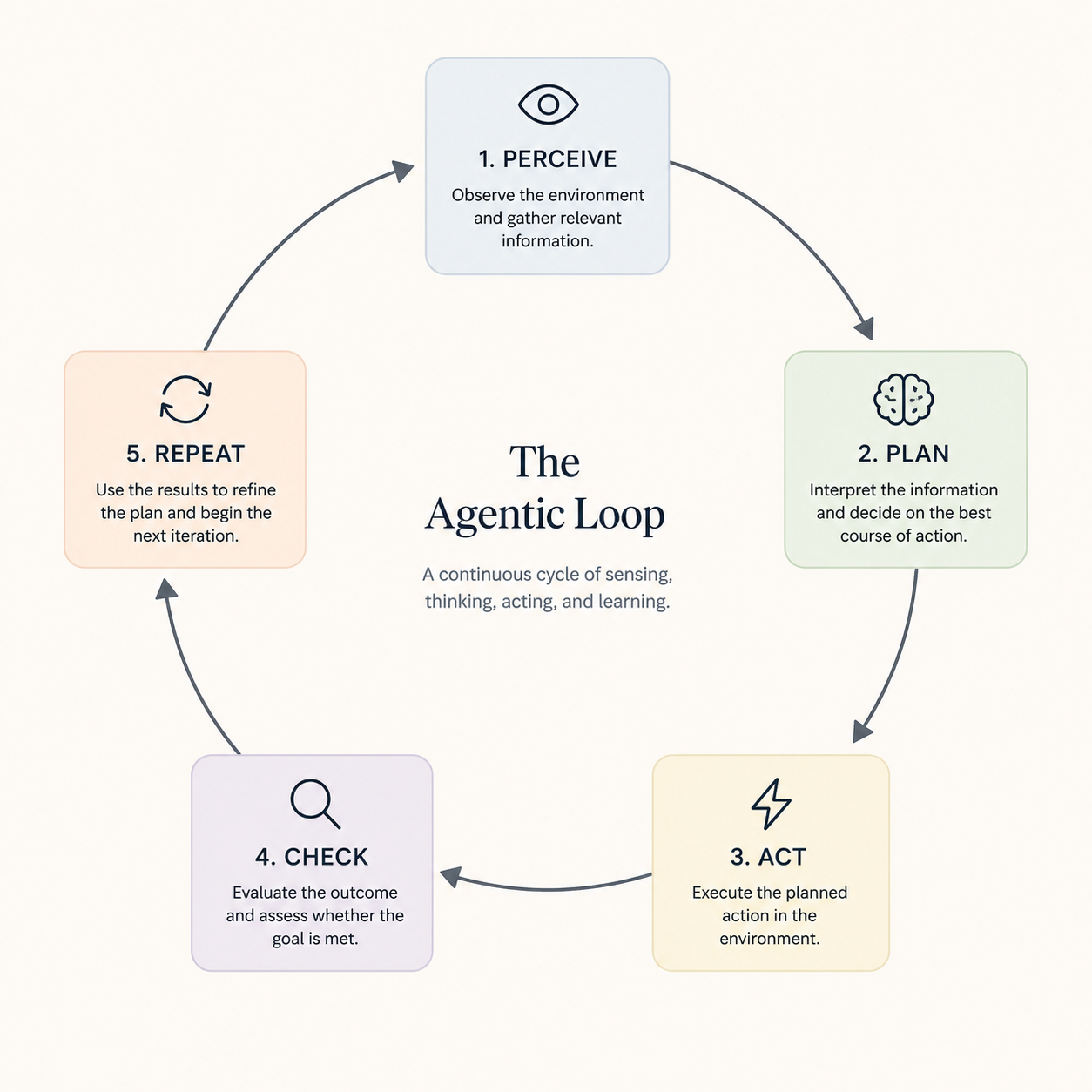
What makes something agentic is the loop: perceive, plan, act, check, repeat. An agent reads the current state of your project, decides what should happen next, does it, looks at the outcome, and adjusts. That loop is the whole game. A summary feature reads and reports. An agent reads and acts — then reads its own action and acts again.
This is why "add a chatbot" doesn't make a tool agentic. The chat box still waits for you. The loop never closes without a human keystroke in the middle of it.
Why the shift is happening now
Two things changed in 2026. Models got good enough to plan multi-step work and stay constrained to a real schema instead of drifting into prose. And tools started exposing structured actions an agent can take — create a task, shift a date, post an update — instead of just text an agent can write.
Put those together and the AI stops being a writer and starts being a worker. It doesn't tell you the project is slipping; it spots the stalled task, pings the owner, and proposes a new date. The status report isn't something you ask for — it's something that's already drafted when you open the tool.
— The sprintrr teamThe test of an agent isn't how well it answers. It's how much moved while you weren't looking.
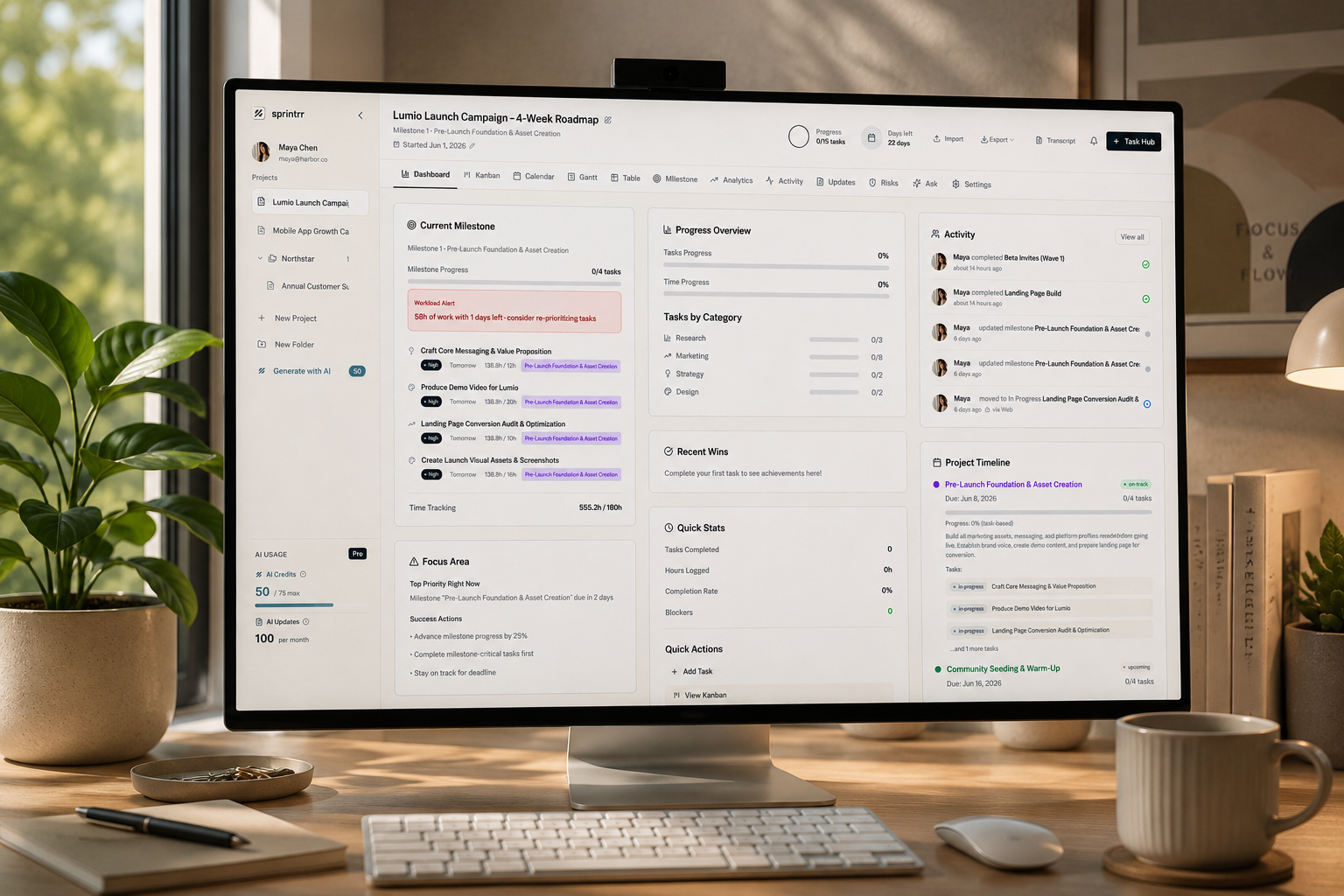
This is the direction sprintrr is built around. You arrive with an idea; you leave with milestones, tasks, and a sprint cadence — generated in seconds, not assembled by hand. From there, the work loop starts handing pieces to the AI: a pasted meeting transcript becomes proposed task creates, updates, and removals. A stalled task triggers a nudge to its owner. A status update for stakeholders is drafted from real activity before you ask for it. You ask a question about the project and get a cited answer grounded in your own tasks and milestones.
How to spot real agentic PM (not marketing)
Every tool will claim "agentic" in 2026. Three questions cut through it:
- Does it close the loop? Can it take an action, see the result, and take the next one — or does it stop after every suggestion and wait for you?
- Does it work between your sessions? Real agents move things while you're gone. If nothing changes unless you're typing, it's a copilot.
- Is the output structured, not just text? A plan you can ship beats a paragraph about planning. The AI should be constrained to your real data model — tasks, dates, owners — not free-writing around it.
aside:
Agentic does not mean unsupervised. The good pattern is agent proposes, human disposes: the AI does the legwork and surfaces a reviewable change. Destructive actions stay opt-in. You keep the veto; you lose the busywork.
The economics: why BYOK matters for agents
Agents run more model calls than copilots — they plan, act, and check in a loop, so they think more often. That makes pricing a real design question, not a footnote. Per-seat tools that meter every AI action turn an agent into a running meter.
The alternative is bring your own key (BYOK): route the AI through your own Anthropic, OpenAI, or Gemini bill instead of paying a markup on top of it. If you already pay a model provider directly, an agentic tool shouldn't take a cut on every step it takes. sprintrr offers BYOK on every plan for exactly this reason — agentic work should get cheaper as models do, not more expensive.
What is agentic project management?
It's AI that pursues a project goal across multiple steps — planning work, taking actions like creating tasks or drafting updates, checking the result, and adjusting — rather than only answering questions when prompted. The AI owns part of the work loop, with the human reviewing.
How is an AI agent different from an AI copilot?
A copilot responds to your prompts and suggests next actions you approve and execute. An agent holds the goal itself: it decides the next step, takes it, evaluates the outcome, and continues — moving work forward between your check-ins instead of inside them.
Will agentic AI replace project managers?
No. It removes the coordination busywork — chasing updates, drafting reports, breaking goals into tasks — so the project manager focuses on judgment, priorities, and unblocking people. The good pattern is agent proposes, human disposes.
Is agentic project management safe to trust?
When it's built as "propose, then approve." Agents should surface reviewable changes rather than silently mutate your project, keep destructive actions opt-in, and stay grounded in your real data. You keep the veto and the audit trail.
Does sprintrr do agentic project management?
sprintrr is built around the work loop: it generates a full plan from an idea, turns meeting transcripts into proposed task changes, nudges stalled tasks, drafts stakeholder status updates from real activity, and answers questions grounded in your project — all reviewable before anything lands.
Turn one idea into a full project plan.
sprintrr generates milestones, tasks, and a sprint cadence in seconds — then helps run the loop. BYOK on every plan.
// more from the journal